
Running a Sex Offender Check in Riverside County
The California Megan's Law Website is the official first stop. The California Department of Justice manages it with information reported by local law enforcement and supplied by registrants. Accept the disclaimer, then search by name or location. A city, ZIP code, county, address, or map view can narrow a Riverside County registry search. Compare the photo, aliases, age, and physical details before treating a result as a match. Mistaken identity is possible, and DOJ says it has not measured the chance that a displayed person will commit another offense.
Local agencies add a second route. People with registration questions should contact the police department that serves their city or the Riverside County Sheriff's Department station for a contract city or unincorporated area. For a person who is now in county jail, use the Sheriff's inmate locator. California Incarcerated Records and Information Search, or CIRIS, covers state custody. Those custody tools answer a different question from registry status.
Why Riverside County Registrants May Be Missing
A blank search does not prove that no registration duty exists. Penal Code 290.46 allows the public website to show only specified information. Some registered people are not subject to public disclosure, and the site excludes juvenile ward registration information covered by Penal Code 290.008. Victim identities are never part of a public profile. The criminal-history portion is also limited to offenses that require registration, so it is not a full case or arrest record.
That boundary matters in Riverside County. The registry is designed for public protection, not a complete account of a person's justice history. When a listed offense or case outcome needs context, the Riverside County criminal court case file may hold the public register of actions and disposition, subject to sealing and access rules.
Searching the California Megan's Law Website
Begin with a broad identifier, then narrow with facts you already know. The official flow requires consent to its terms before any results appear.
- Open the California Megan's Law Website and read the state disclaimer.
- Acknowledge the conditions, then choose a name or geographic search.
- Enter a Riverside County city, ZIP code, address, or name and review map or list results.
- Open a likely profile and compare its photo, aliases, age, description, offense, and status.
| Field Label | Type | Required | Use |
|---|---|---|---|
| Disclaimer acknowledgement | Checkbox or button | Yes | Accepts the conditions before search. |
| Name search | Text | No | Finds a registrant by name. |
| Address search | Text or map | No | Searches an address and nearby area. |
| City, ZIP, or county | Text or dropdown | No | Limits results to a Riverside County place. |
| Map or list | View toggle | No | Changes how available results are shown. |
Correcting Riverside County Registry Errors
DOJ warns that local reports and registrant-supplied data may contain errors. If a profile appears to identify the wrong person or contains a bad local detail, save the profile reference without copying sensitive data. Then contact the police or sheriff's department responsible for the registration. Corrections may also be sent to MegansLaw@doj.ca.gov. Give the agency enough detail to identify the questioned entry and explain what appears wrong.
Do not confront the person shown. A correction request belongs with the data custodian. The registry's warning is especially important in a county with many cities and contract-policing areas because the right local office depends on where registration occurs.
The official Penal Code 290.46 source sets the disclosure boundary behind these results.
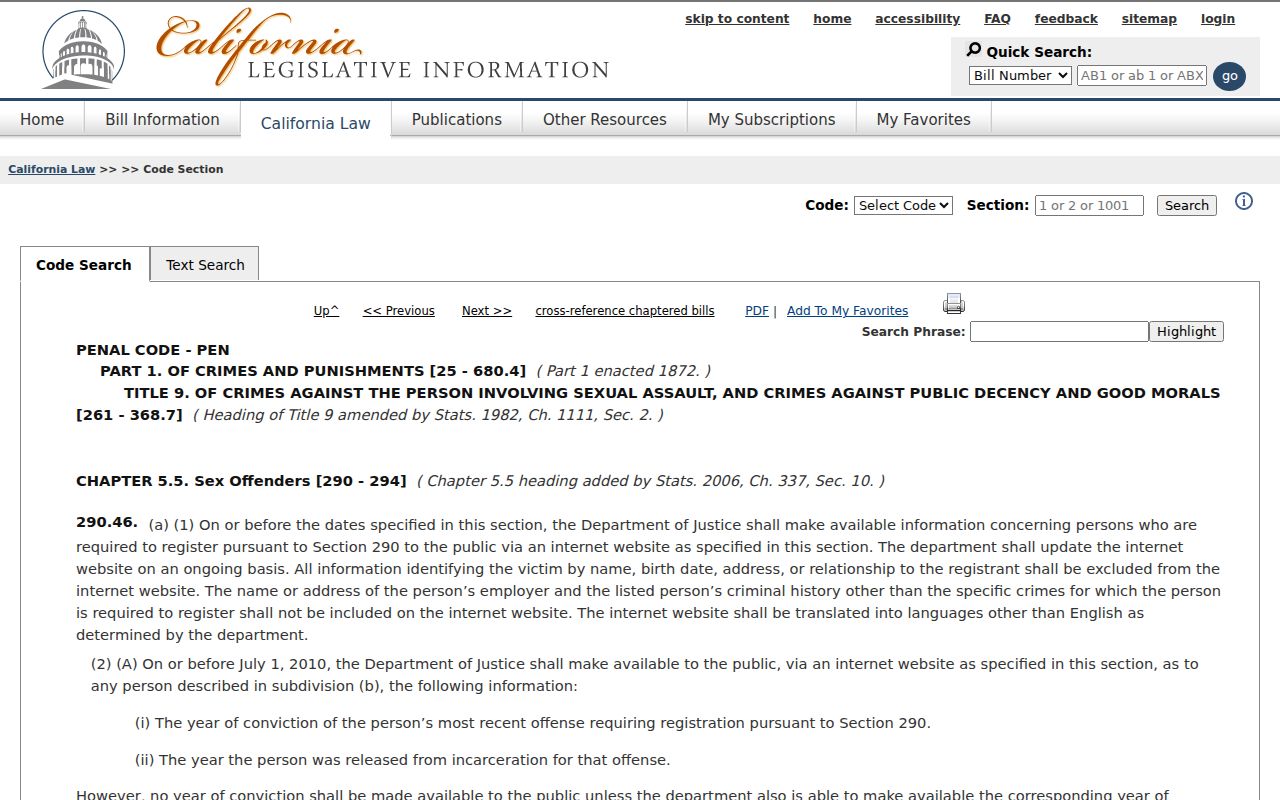
The statute explains why a public result can differ from a complete registration record held by law enforcement.
What a Registry Profile Shows
A Riverside County registry profile combines identity checks with the limited facts California permits for disclosure. Fields vary with the applicable law and the data reported. Read the full entry rather than relying on a map marker.
| Name and aliases | The reported name and known alternate names. |
|---|---|
| Photo and description | A photograph, age or birth information, physical traits, and sometimes scars, marks, or tattoos. |
| Address or location | The address or location detail that California law allows the site to display. |
| Registration offense | Permitted offense information, including the most recent qualifying conviction year and release year when applicable. |
| Tier | The registration tier when shown under current disclosure rules. |
| Status | Compliance or registration indicators if the public entry includes them. |
| Other fields | Vehicle, employer, or school information may appear when disclosure law permits. |
Profiles omit victim identifying information. They also omit offenses that do not require registration and juvenile ward registration information barred from the public site.
Riverside County and National Registry Searches
The California site works best for a Riverside County address or a person believed to live in the state. The U.S. Department of Justice's National Sex Offender Public Website, known as NSOPW, provides the cross-state layer. It searches participating state, territorial, and tribal registries by name or ZIP code. Use it when someone may have moved across a county or state line.
NSOPW does not replace California's source record. Return to the California profile for state-specific disclosure and correction instructions. If current confinement is the concern, check the Riverside County jail locator or CDCR CIRIS instead.
The official NSOPW search page shows how the national gateway reaches multiple registry systems.
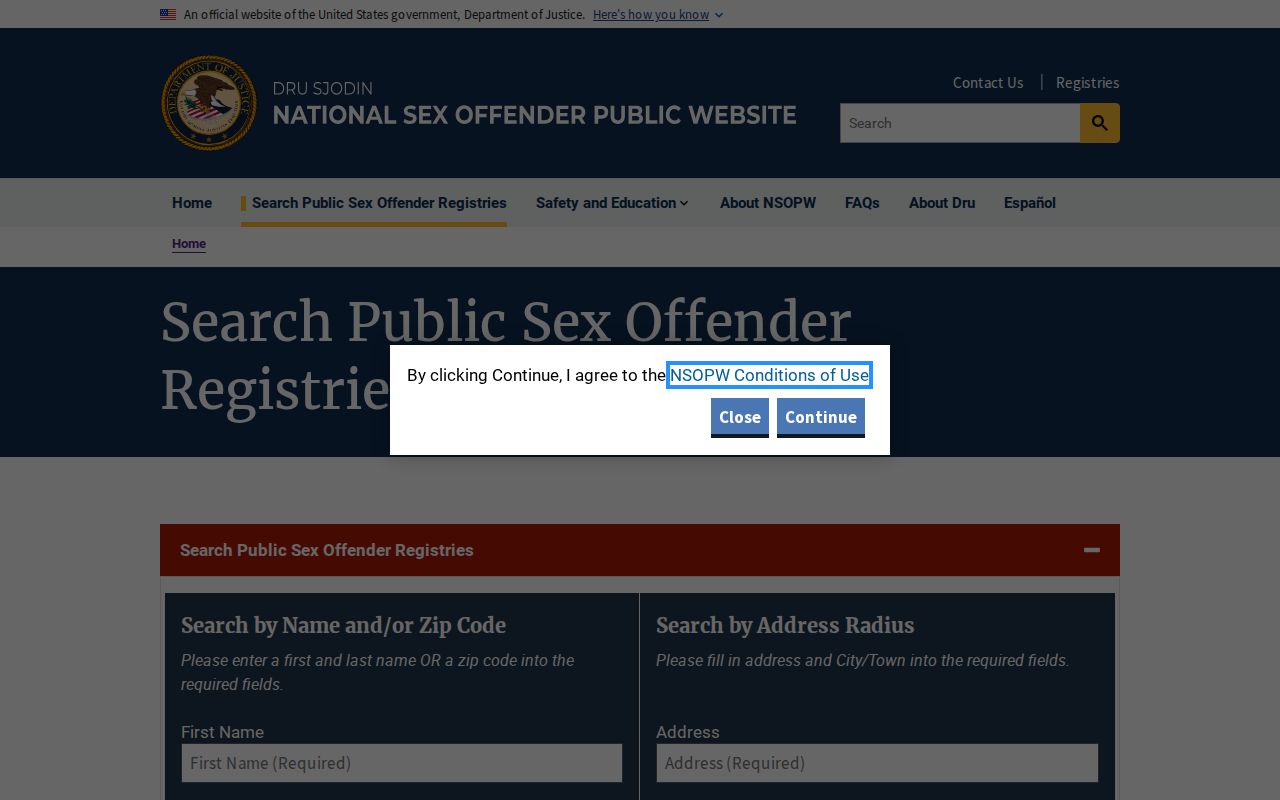
This national view is useful for movement across borders, while Riverside County details still come from California and local law enforcement.
Registration Requirements and Levels in California
California's SB 384 tier system replaced a single lifetime model with minimum periods tied to statutory categories. Tier placement is a legal classification, not a score that predicts future conduct. Adult minimums are ten years for Tier 1, twenty years for Tier 2, and life for Tier 3. Juvenile minimums differ. A minimum period does not mean automatic removal on that date because the person may need to qualify and petition under the governing process.
| Tier | Adult period | Juvenile period | Public meaning |
|---|---|---|---|
| Tier 1 | Minimum 10 years | Minimum 5 years | Lowest statutory duration. |
| Tier 2 | Minimum 20 years | Minimum 10 years | Longer statutory duration. |
| Tier 3 | Lifetime | Depends on statutory category | Lifetime adult registration. |
Local police and Riverside County Sheriff's stations perform registration functions. Probation is separate. The Riverside County Probation Department supervises county probation clients, while CDCR handles state parole functions.
This agency distinction helps prevent a registry question from being sent to the office that handles court-ordered supervision instead.
Corona's Riverside County Registration Route
Corona provides a concrete local example. Its police department requires registrants to schedule sex-offender registration by calling 951-736-2290 or emailing 290Reg@CoronaCA.gov. That appointment line is for registration duties, not a substitute for the public Megan's Law search. Residents of contract cities and unincorporated Riverside County should contact the Sheriff's Department or the local station serving their area. Other incorporated cities may direct registrants to their own police departments.
For general Sheriff routing, call 951-955-2400 or contact the appropriate patrol station. Local offices can also receive questions about a possibly inaccurate profile. The public should not try to enforce registration rules independently.
Lawful Use and Community Notification
Use Riverside County sex offender information for awareness, family safety plans, and informed community precautions. It is not proof that a person will commit a future offense. DOJ expressly says it has not assessed that risk. Confirm identity, read the profile limits, and send suspected errors to the responsible agency.
Misuse is a crime: California law can impose criminal penalties and civil liability for using Megan's Law data to harass, threaten, intimidate, or commit another offense.
The state's penalties page says misuse during a misdemeanor can add a fine from $10,000 to $50,000. Misuse during a felony can add five years in prison. A registrant who uses the search function may face a fine up to $1,000, up to six months in county jail, or both, subject to the stated exception for viewing the main page and links.
The California Megan's Law penalties source gives the official limits and consequences.
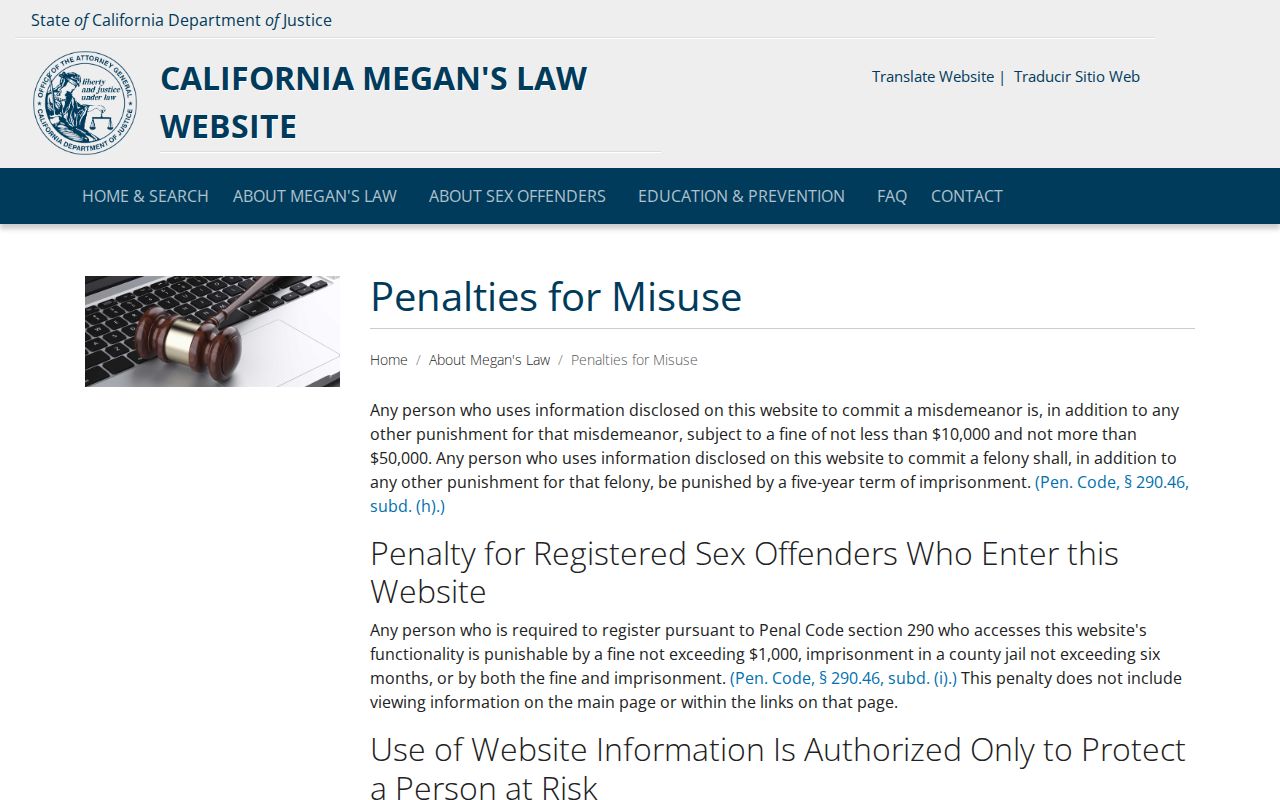
Those limits keep community notification focused on safety and place enforcement with police, the Sheriff, prosecutors, and courts.
Registry Status Versus Riverside County Custody
A Megan's Law result answers whether California may publicly disclose registration information. It does not show a complete custody history or prove where a person is now. For current Riverside County jail custody, use the Sheriff's Inmate Information System. For California prison custody, use CDCR CIRIS. When probation status matters, start with the Riverside Superior Court case record and then contact the relevant Probation Department office for information it may lawfully release.
This sequence avoids a common mistake. Registration, probation, parole, and incarceration are distinct legal statuses maintained by different agencies. One system may be current while another is restricted, delayed, or outside its scope.