
How to Check Criminal History in Corona
Corona has more local options than a contract-policing city. The Police Records Section handles crime, incident, arrest, traffic accident, and vehicle reports. The City Clerk request route accepts crime or incident requests. Approved collision reports may be available through eCrash. County systems take over for jail custody and Superior Court cases.
- Call Corona Police Records at 951-736-2330 option 3 before visiting.
- Use the City Clerk public-records request for an eligible crime or incident report.
- Use eCrash for an approved, releasable traffic collision report.
- Check the Sheriff inmate locator for county booking and Superior Court Public Access for filed charges.
- Use California DOJ fingerprint review for your own statewide summary rather than treating a city clearance letter as statewide.
The route should match the record. Police cannot certify the full history held by courts and DOJ, while a court docket does not replace the underlying incident report.
Corona Police Records at Public Safety Way
The Corona Police Department is at 730 Public Safety Way, Corona, CA 92880. Non-emergency dispatch uses 951-736-2330 option 2, while Records uses option 3. The Records Section publishes hours of Monday through Thursday, 8 a.m. to 6 p.m. Calling first helps confirm required materials, staff availability, and whether an appointment or narrower service window applies.
The official Corona Police Records Section page details these services.
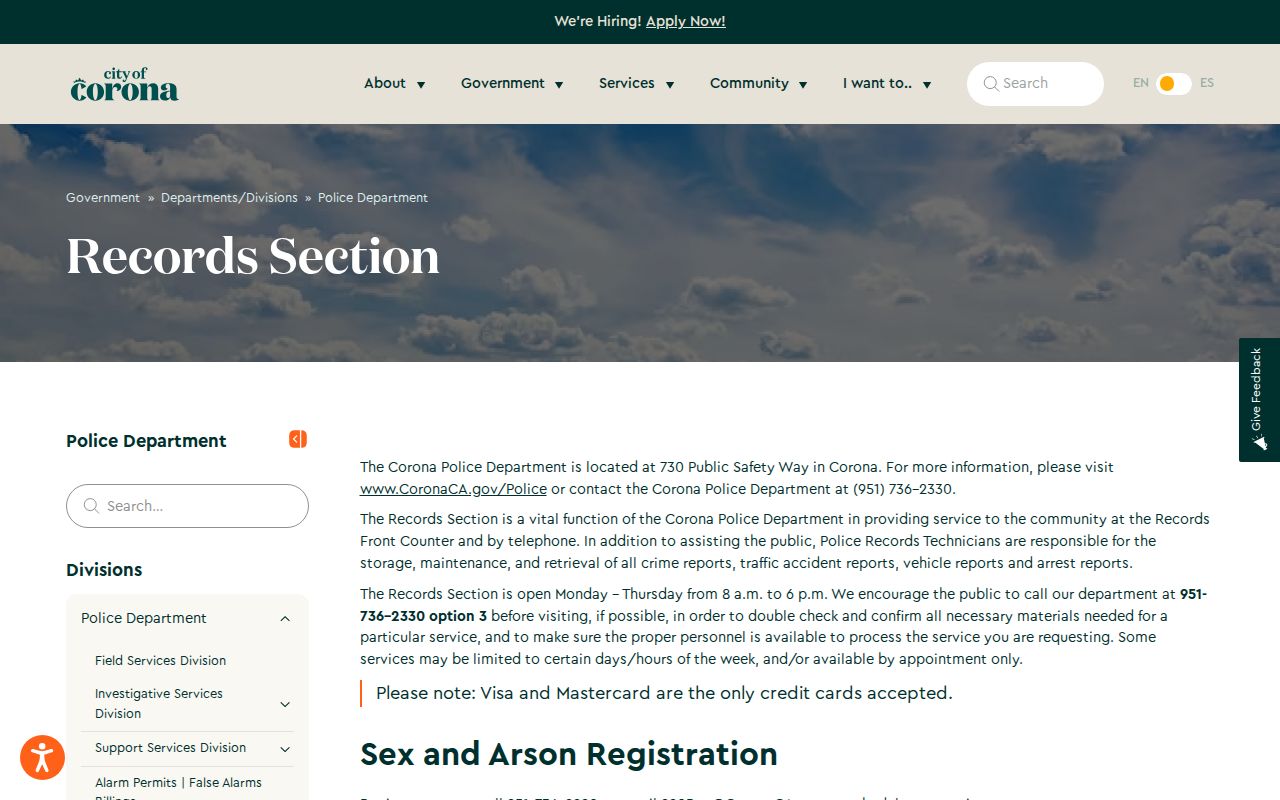
The published detail makes this office the clear first stop for a Corona-created police file.
The Corona Police Department
Corona Police maintains crime reports, traffic accident reports, vehicle reports, and arrest reports. Release depends on requester authority and California law. A useful request supplies the incident type, date, location, report number if known, and the requester's relationship to the event.
The department advises visitors to call before arriving. Visa and Mastercard are the only credit cards accepted. That payment limit can matter for a report, clearance letter, or other paid service. It does not change whether a record is legally releasable.
Corona Crime Reports Use the City Portal
The Police Records page directs online crime and incident report requests through the Corona City Clerk public-records system. This is an official city route, not a third-party people search. The request should be narrow enough for staff to identify the responsive police record and review any protected content.
The Corona public records request page shows the submission channel.
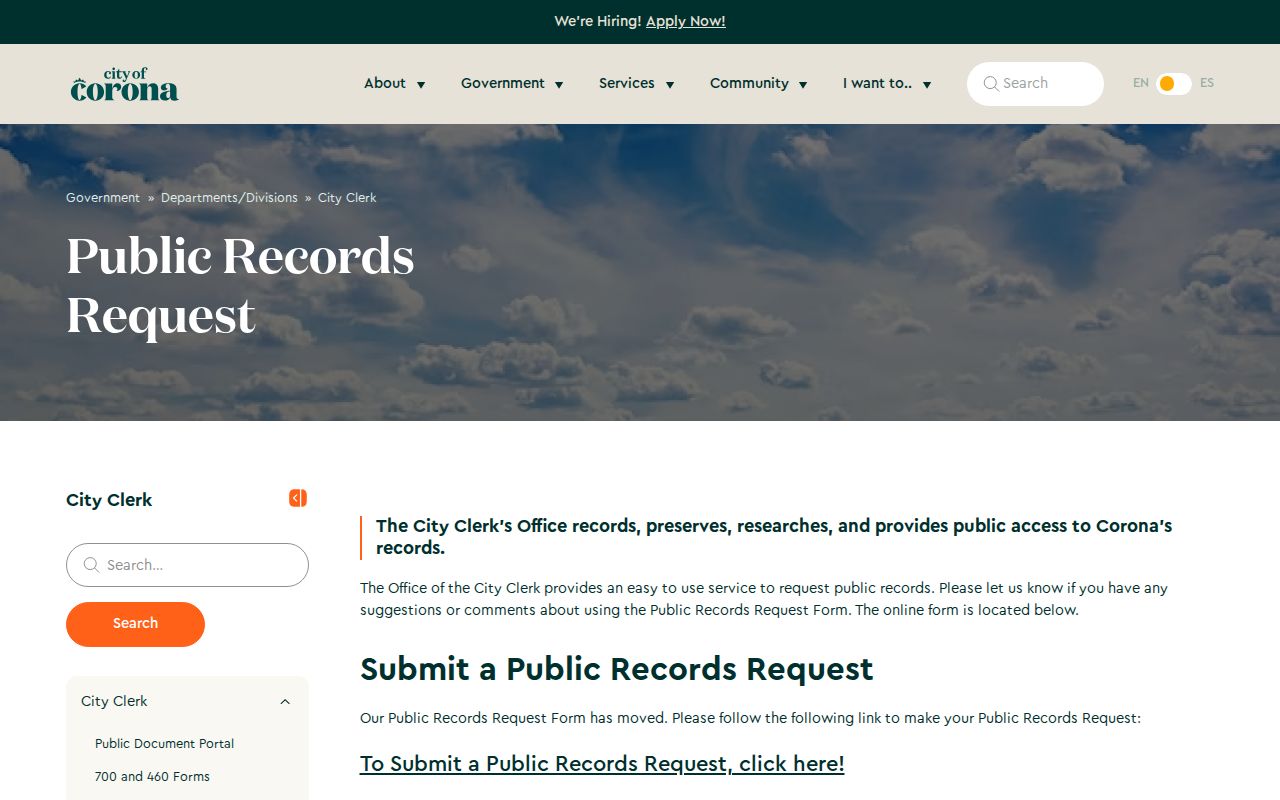
Records staff may redact protected details or withhold exempt material while releasing the portion allowed by law.
Arrests and Bookings in Corona
Corona Police creates the police and arrest report. If the person is booked into a Riverside County jail, Sheriff Corrections creates the booking record and the public inmate system becomes the custody source. It accepts a required last name plus optional first name and birth date.
A booking can list current custody and charges but does not establish guilt. When prosecutors file charges, Riverside Superior Court creates a separate court case. After release, the person may vanish from a current-inmate search even while a criminal case continues. For that reason, a custody check and a case check answer different parts of the timeline.
Corona Traffic Reports Through eCrash
Corona lists traffic reports at 25 cents per page. Approved and releasable collision reports may also be obtained online through LexisNexis eCrash. This portal is used here only because Corona Police names it as its official collision-report channel. It should not be used as a broad person search.
The department-linked eCrash source provides collision lookup.
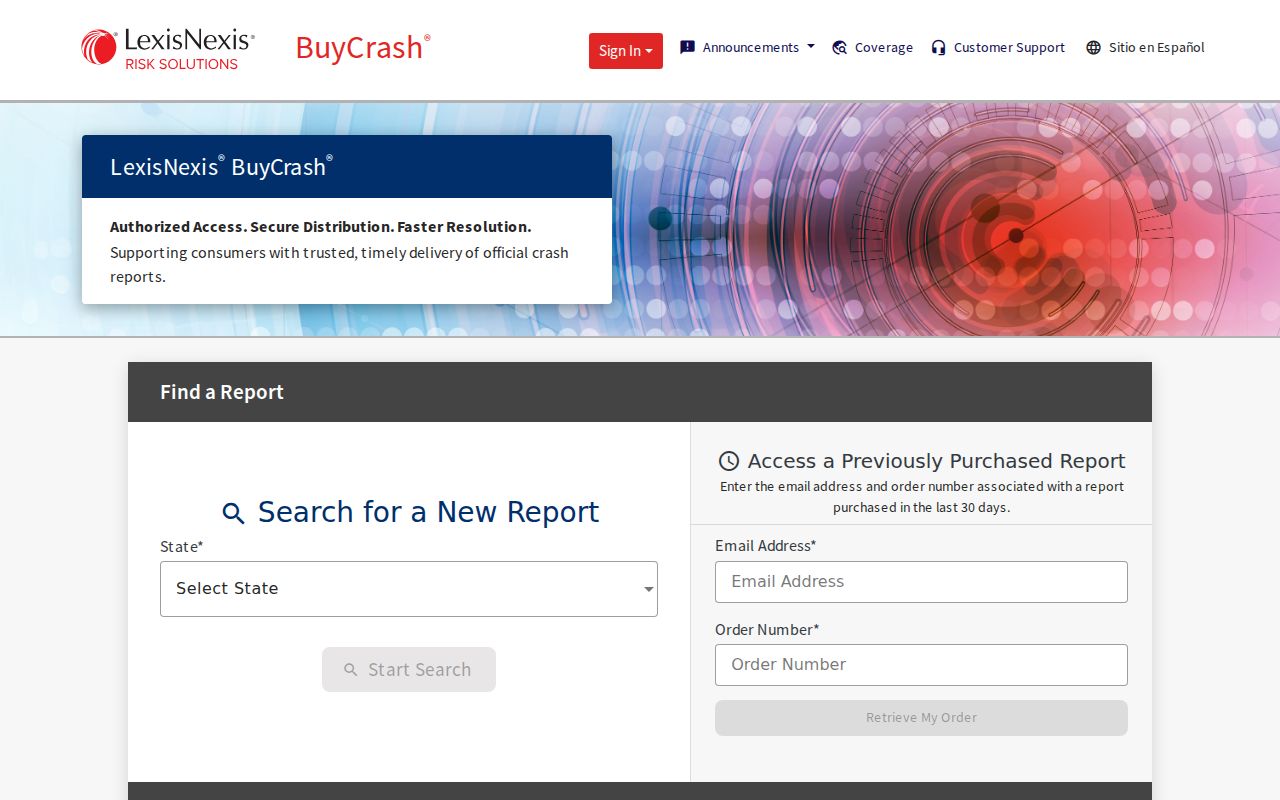
A collision report remains distinct from a local criminal clearance letter, an arrest report, and a Superior Court case.
Corona Municipal Court Records
California unified municipal courts into the Superior Court system, so Corona has no separate city criminal docket. Corona Courthouse is at 505 South Buena Vista Avenue, Suite 201, Corona, CA 92882, with phone 951-777-3147. Its page lists clerk hours Monday through Friday from 7:30 a.m. to 4 p.m., phone hours ending at 2 p.m., public viewing computers, and a drop box.
| Court Name | Superior Court of California, County of Riverside |
|---|---|
| Local Courthouse | Corona Courthouse |
| Case Lookup Channel | Riverside Superior Court Public Access, viewing computers, clerk, or records request |
| What the Docket Shows | Register of actions, calendars, dispositions, and permitted documents |
| Search Cost | Case-number search is free; criminal name search requires paid credits and an account |
Electronic court records can exclude sealed, confidential, or otherwise restricted matter. Unless electronically certified, the online version is not the official court record.
Corona's Local Clearance Letter
Corona offers a local criminal history verification or clearance letter for $27. It reflects the local service described by Corona Police. It is not a California DOJ record review and should not be described as a complete statewide rap sheet.
For a California criminal history, the department directs users to DOJ at 916-227-3849. California residents reviewing their own record use the DOJ record-review form and Live Scan. DOJ charges a $25 state processing fee, while the chosen Live Scan site may charge a separate rolling fee. The local and state products differ in scope, method, and custodian.
Post-Arrest Services in Corona
Corona publishes several services that can follow an arrest or court order. Vehicle releases require an appointment through Records at 951-736-2330. The listed storage or impound release fee is $249 for causes such as arrest, expired registration, abandonment, or traffic hazard, with no charge for victims of stolen vehicles.
Property release appointments use 951-736-2393 and are scheduled Monday through Friday from 8 a.m. to 3:30 p.m. Sex and arson registrants must arrange an appointment at 951-736-2290 or 290Reg@CoronaCA.gov. These service contacts are operational routes, not general criminal-record databases.
Where Corona Records End Up
A Corona incident begins with the city's police file. County booking creates a Sheriff custody record. A prosecution creates a Riverside Superior Court file. Fingerprints and reportable case dispositions may later reach California DOJ.
Record flow: Corona Police Department › Riverside County Courts › California Department of Justice
Recent activity is often clearest at the creating agency. Court Public Access is the better source after charges are filed, and DOJ fingerprint review is the official route for a person's own statewide summary. Updates may not appear in all systems at once.
Corona Subpoenas and Records Custody
Subpoenas for Corona police records are served on the Custodian of Records. The department requests a minimum $15 check with a records subpoena. An appearance subpoena carries a published $275 deposit for each sworn or non-sworn employee, and the page requires 15 days between service and appearance.
Those rules concern compulsory legal process and should not be confused with an ordinary California Public Records Act request. A person simply seeking a disclosable report should begin with Records or the city request portal, not use subpoena procedures unnecessarily.
Corona Police and DOJ Compared
Corona Police can confirm local records within its stated service. DOJ maintains California summary criminal history and does not offer a general public name search. The person who is the subject of the record may request their own copy by fingerprint.
| Need | Official Route |
|---|---|
| Corona incident or arrest report | Corona Police Records or city request portal |
| Local verification or clearance letter | Corona Police, $27 |
| Current county jail booking | Riverside Sheriff inmate locator |
| Filed criminal case | Riverside Superior Court Public Access |
| Own California summary | California DOJ Live Scan record review |
The comparison keeps a local letter from being mistaken for a statewide fingerprint result.
Public Access Rules for Corona Records
Corona police records are reviewed under the California Public Records Act and other laws that protect investigations, confidential sources, victims, witnesses, juveniles, and personal information. Court access follows California Rules of Court. DOJ summary history has its own strict dissemination limits.
Key Statutes:
California Public Records Act governs access and exemptions for local records.
Penal Code section 11105 limits state summary history dissemination.
Rule of Court 2.503 governs public electronic trial-court records.
Rule of Court 2.504 explains official electronic records.
A narrow request can speed identification, but no wording defeats a lawful exemption. The office should state the basis for withholding or redaction.
Preparing for Corona Records Service
Call Records before traveling to Public Safety Way. Ask whether the report is complete, whether the requester is authorized, what identification is required, and whether an appointment applies. Confirm the charge and payment method. Corona accepts Visa and Mastercard as its only credit cards.
Bring the report number when possible. Otherwise provide a narrow date, location, event type, and identifying details. Staff must review restrictions before release, so active cases and protected victim or witness details may lead to withholding or redaction. Records option 3 handles reports and vehicle release scheduling. Other services use separate contacts.
Corona Identifiers Improve Record Matches
Bring a report, booking, or case number whenever one is known. Names alone can match more than one person. An event date, location, date of birth, report type, and requester relationship can help Corona Records identify the right file and decide whether release is authorized. Court case numbers also avoid the paid name-search route.
Do not read an arrest charge as a judgment. The police report documents the event, the booking reflects custody, and the Superior Court disposition gives the filed case outcome. A local clearance letter has a narrower scope than the California DOJ fingerprint summary. Checking those labels and custodians prevents a Corona criminal history result from being stretched beyond what the official record actually establishes.